


What to prepare beforehand
These five things save the most hassle on the night:
- A week ahead: lock in the date and the room with a screen, and appoint a colleague as quizmaster. Check right away whether you can cast to that screen or need to bring an HDMI cable; that is the classic ten-minute delay.
- A day ahead: create a free account, pick the quiz and play a round of it yourself. Then you know what is coming and only have to press start on the night.
- On the day: test the sound if there is a music round, and check reception in the room. Players join on their own phones, so wifi or mobile data has to work.
- Playing in teams? Each team shares one phone, since scoring is per phone. Teams of four to six work best, and mix the departments. Colleagues who never normally speak end up conferring, which is half the point of a team outing.
- Put up a prize. It does not have to cost anything, but something tangible on the table makes the last round a lot more tense.
That is all you need. Below is how the evening itself runs.
Run of show: what the quiz night looks like
Every company outing is different, but this program almost always works. Count on one and a half to two hours for a full quiz night:
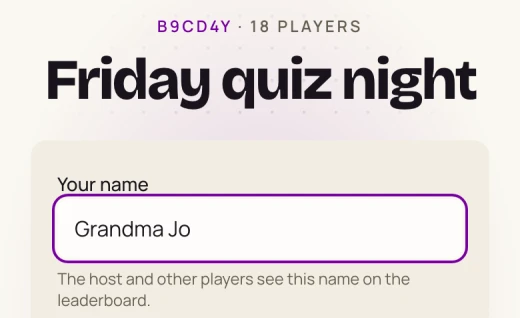
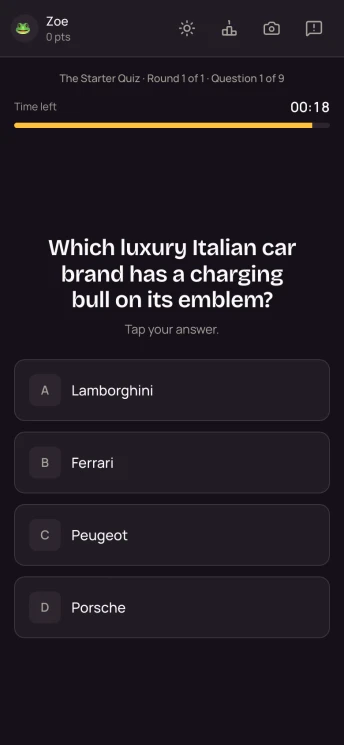
- Doors open (15 min): put the host screen up on the TV or projector. Colleagues scan the QR code, pick a name and grab a drink.
- Warming up (2 rounds, ~30 min): start with accessible rounds like multiple choice or word association so everyone finds the rhythm.
- Break (15 min): argue about that one question nobody got, while the standings stay up on the screen.
- Turning up the heat (2 rounds, ~30 min): time for the music round and On the map. This is where the gaps open up.
- Finale (~20 min): one last round, the final standings and the penalty wheel for the losers. That last quarter hour is what everyone remembers.
Short on time? Three rounds without a break fits in about an hour.